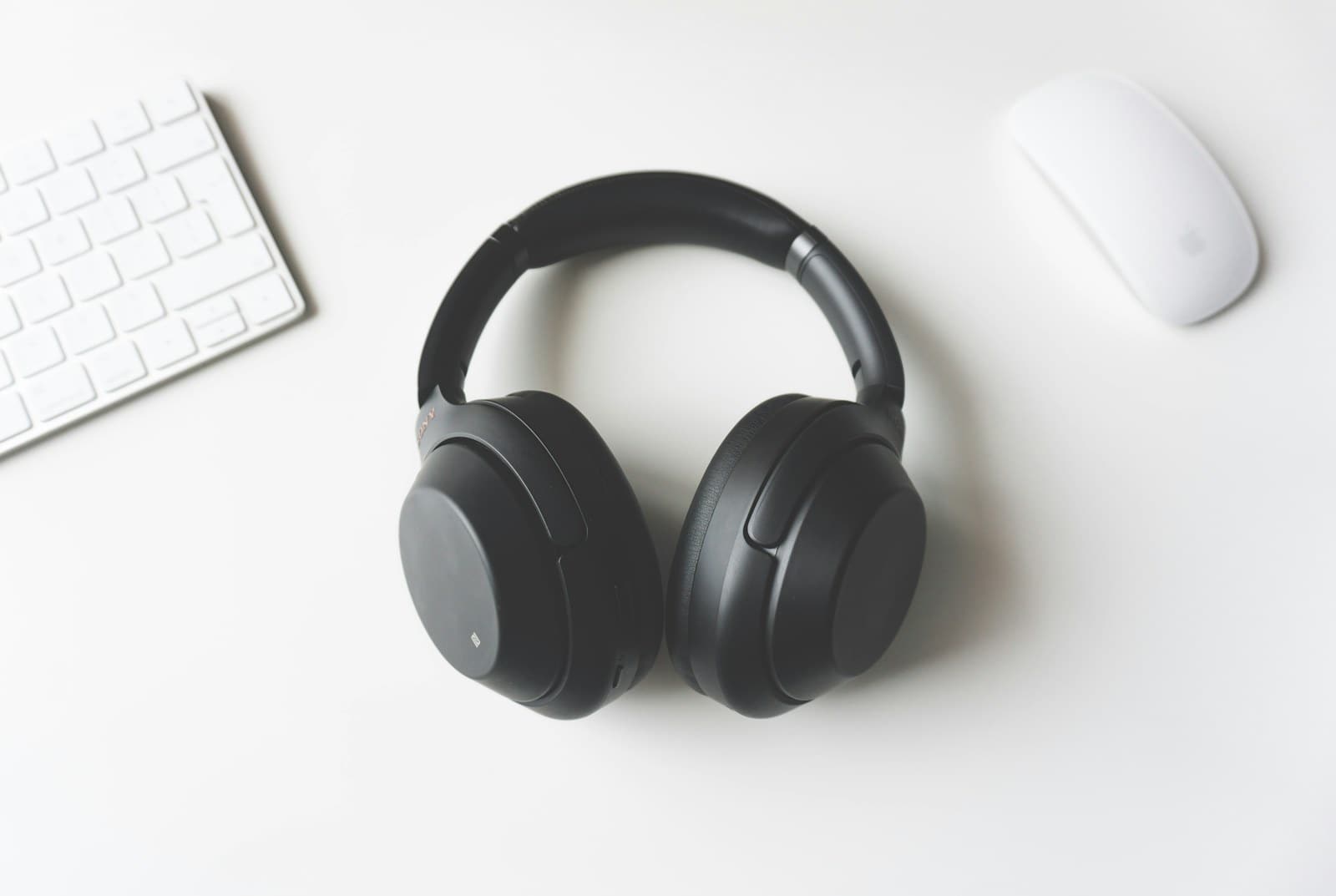
The morning train is the easy part to imagine. The harder parts are squeezing a case into your bag, hearing a platform change, taking a call outside the station, and arriving without sore ears. Those moments should decide which headphones you buy. A long feature list rarely tells you whether the headband works with your glasses or whether you can find the pause control while carrying coffee.
For a regular seated commute, start with comfortable over-ear noise-cancelling headphones. For a crowded walk-and-bus journey with frequent stops, consider whether a smaller pair of earbuds would be easier to manage. Our earbuds versus headphones guide explains that tradeoff. The recommendations here are based on manufacturer information and practical buying criteria, rather than hands-on comparison testing.
Start with your route, then your budget
Write down the loudest sustained part of your trip and the part requiring the most attention. Active noise cancellation can make steady transport noise less intrusive, but it does not create silence or guarantee that you will hear announcements. Pause playback and remove the headphones whenever the situation needs your attention. An awareness mode is a convenience, not a substitute for looking and listening.
Next, identify your longest uninterrupted wearing session. Short commutes make packability especially valuable; longer journeys put more emphasis on headband pressure, ear-cup space, and heat. If possible, try a pair while wearing your usual glasses. A comfortable fit without glasses may change when the arms sit underneath the pads.
| Your routine | Prioritize | Check before paying |
|---|---|---|
| Train journey followed by desk work | Comfortable fit and reliable controls | Switching between your own phone and laptop |
| Frequent short rides | Easy storage and quick removal | Case dimensions against your everyday bag |
| Travel with older entertainment equipment | A suitable wired connection | Included cable and the source device’s socket |
Two useful starting points
Sony WH-1000XM5: for a commute that turns into a working day. Sony lists noise cancellation and hands-free calling on its official WH-1000XM5 page. It is a sensible model to investigate when one pair must cover transport, focused listening, and occasional calls. That does not establish microphone performance on your particular windy street. Check the controls, supplied accessories, and exact device-switching behavior against your own equipment before choosing it.
Bose QuietComfort Headphones: for listeners who value listening modes and a cable option. Bose describes Quiet, Aware, and customizable listening modes, along with an audio cable with an in-line microphone, on the QuietComfort product page. Those are useful buying considerations if your journey moves between a noisy carriage and a quieter office. Confirm the cable’s connectors suit your intended source; a cable in the box does not mean it plugs directly into every phone.
Neither recommendation is a universal winner. Someone sensitive to pressure should buy according to fit and the retailer’s actual return terms. Someone using headphones mostly outdoors may find that neither large over-ear design matches their routine.
Where extra spending helps
Spend more when it solves a repeated problem: uncomfortable pads, an awkward control system, unreliable connections with your equipment, or poor storage in a bag you use daily. Avoid paying chiefly for a wireless codec your phone cannot transmit or a spatial-audio feature that you rarely use. Compatibility is more valuable than a badge on a box.
Do not buy a second charger automatically. Check whether an existing suitable charger and cable cover the headphones. However, keep the required audio cable separate from the charging cable in your packing plan: those functions are not interchangeable by default. For longer trips, put the case somewhere accessible rather than underneath a laptop and lunch container.
Make the first week count
Use the headphones on your actual route while any applicable return window is open. Check comfort after a normal listening session, not just a song. Try a call in a safe stationary location, confirm the pause and awareness controls, and see how your laptop behaves when your phone rings. Keep packaging until you know the fit and connection behavior suit you.
Wipe contact surfaces using the manufacturer’s care instructions, let damp pads dry before storing, and avoid treating ordinary commuting headphones as exercise equipment. Replacement pads and service options matter because pads wear long before a familiar playlist does. Look up those options before buying, especially if you intend to keep the pair for years.
Questions worth asking
Will noise cancellation remove every voice?
No. Results vary with fit, the type of sound, and the particular product. Do not choose headphones on the assumption that conversations or sharp unexpected sounds will disappear.
Should I buy the newest model?
Only if its differences address your routine. Compare the exact model names, accessories, current seller terms, and features rather than assuming a higher generation number is automatically the better purchase.
Are these suitable for running?
That is a different brief. Stability, environmental awareness, and the manufacturer’s exercise guidance matter more there. Start with our open-ear running guide instead of assuming a commuting pair can do everything.
Explore the options
When your route and fit requirements are clear, explore WH-1000XM5 at Sony or explore QuietComfort Headphones at Bose. Check the current configuration, availability, and purchase terms on the official store before ordering.