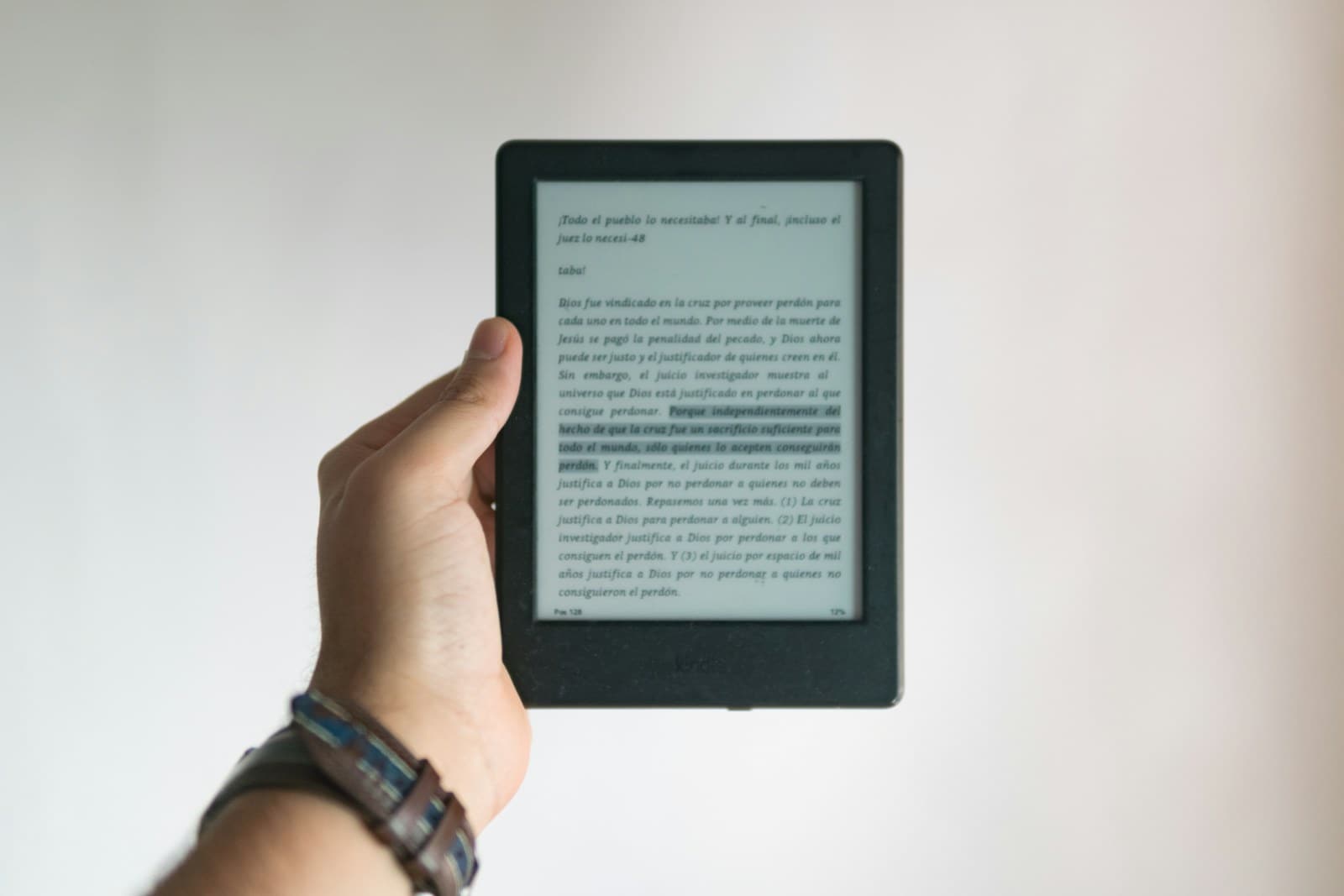
The best reason to buy an e-reader is a reading habit that needs a better home. Perhaps your phone interrupts every chapter, paperbacks fill a small travel bag, or you want to read in bed without balancing a heavier tablet. The right device makes returning to a book easier. A long feature list will not compensate for a store or library system that lacks the books you want.
Start with five titles you would actually read next. Look for them in the relevant ebook store and through your public library. This simple check can tell you more about a purchase than comparing screens before understanding the catalog behind them.
Check your existing books first
Books bought from one ebook platform do not necessarily move freely to another. File formats, account systems, and digital rights restrictions can determine where a book opens. Do not assume that downloading a file makes it compatible with every reader.
If you have a substantial existing collection, inspect its permitted reading options before buying into a different ecosystem. Visit Kobo’s official help center and find the supported formats and transfer instructions for the exact reader you are considering. Format support alone does not override restrictions attached to a particular purchased book.
Library borrowing deserves its own check. Availability depends on your library, country, service, and device. Consult OverDrive’s official help center for your device and borrowing service, then confirm the process with your own library. A friend’s borrowing experience in another country may not apply to your account.
Choose the reading experience you need
For mostly novels and narrative nonfiction, a straightforward monochrome reader deserves serious consideration. You spend most of the time looking at text, so comfortable type, manageable weight, and straightforward page turning can matter more than features you open only occasionally.
The Kobo Clara BW is a real product to investigate for that approach. Find it through Kobo’s official website and review the available regional listing for its screen, lighting, storage, and supported services. Think about whether you read one-handed on public transport, place the reader on a table at lunch, or use it while lying on your side. Physical comfort is part of the specification even when it does not fit neatly in a comparison chart.
Explore at Kobo: readers and regional availability
It is a promising direction for text-focused readers who want a dedicated device. It is less suitable if your main material consists of large textbooks, heavily designed magazines, or work documents that demand rapid scrolling and annotation.
Buy color for a specific reason
The Kobo Libra Colour offers another direction for people interested in color book covers, illustrations, and supported annotation features. Color can be useful, but first ask what you will regularly look at beyond black text. Paying more for a capability that appears only on the library screen is unlikely to transform your reading routine.
Find the Libra Colour through Kobo’s official reader catalog and check accessory requirements and the exact note-taking features you want. A compatible stylus may be a separate purchase. Include it in the budget if annotation is the reason for choosing the device.
Explore at Kobo: color readers and accessories
Color electronic paper also has a different visual character from a phone or tablet display. If vivid photography is your main interest, view the actual screen in person where possible. Choose a reader for sustained reading rather than expecting every page to look like it does on a glossy tablet.
Think carefully about PDFs
A reader that opens a PDF may still be inconvenient for that PDF. A fixed page designed for a large sheet of paper can become cramped on a smaller screen. Enlarging sections and moving around a page changes the rhythm of reading.
If academic papers, technical diagrams, or dense reference books dominate your reading, try a representative file on the intended device. A tablet or larger reader may be a more appropriate purchase. For ordinary ebooks with adjustable text, a smaller device can remain the more comfortable travel companion.
Plan for everyday ownership
A cover can protect the screen in a bag, particularly if you carry keys and other hard objects. Check whether a case adds useful grip or merely weight. Buy a charging cable only if your existing compatible cable does not already do the job.
Keep account recovery details accessible, install appropriate software updates, and download books before leaving dependable Wi-Fi. Check how the reader handles borrowed-book expiry and offline access. Those small administrative details become more noticeable when you are halfway through a chapter on a train.
Do not assume a water-resistance claim means unlimited protection. Follow the exact device’s care instructions, especially around charging and drying. A dedicated reader can be an easy device to live with, but it still has a delicate screen and electronic connections.
Frequently asked questions
Is an e-reader worthwhile if I already own a tablet?
Yes, if a dedicated reading device helps you read more comfortably or with fewer distractions. Keep the tablet if you mostly read illustrated material and are already happy with it.
How much storage should I buy?
Consider your actual files. Text ebooks and illustrated publications have very different needs. A large advertised library is not a reason to pay for capacity you will never use.
Should I switch platforms for a sale?
Only after checking your existing purchases, desired titles, library access, and total accessory cost. A discount on hardware can be poor value if it separates you from the books you already own.